

|
Getting your Trinity Audio player ready...
|
- Bitcoin mining margins are collapsing as energy costs rise.
- Only miners with cheap power or AI diversification may survive 2028.
- The next halving could mark mass consolidation across the industry.
The Bitcoin mining industry is facing a defining moment. Rising energy costs, fierce competition, and shrinking profit margins are testing even the strongest operators. Fred Thiel, CEO of MARA Holdings, believes only miners with access to cheap power or diversified operations—such as AI and high-performance computing (HPC)—will survive the next halving cycle.
“Bitcoin mining is a zero-sum game,” Thiel told CoinDesk. “As more capacity enters the network, margins tighten, and the floor becomes your energy cost.”
Growing Divide in the Mining Sector
A clear divide is emerging. Miners with low-cost, stable power sources and advanced infrastructure are holding their ground, while smaller operators are being squeezed out. Hardware manufacturers and major firms like Tether are mining for themselves, reducing equipment sales and pushing independent miners further to the edge.
“The global hashrate keeps growing, which means everyone else’s margins keep shrinking,” Thiel noted. This intensifying race is driving many companies to explore new revenue streams like AI computing, where existing data centers and cooling systems can be repurposed for more profitable workloads.
The Halving Problem: 2028 and Beyond
Bitcoin’s next halving, expected in 2028, will slash block rewards to just over 1.5 BTC. Unless Bitcoin’s price or transaction fees increase dramatically, many mining operations could become unprofitable.
“Bitcoin was designed so transaction fees would eventually replace the subsidy,” Thiel said. “But that hasn’t happened yet. If Bitcoin doesn’t grow at least 50% per year, the math gets very hard after 2028—and even tougher in 2032.”
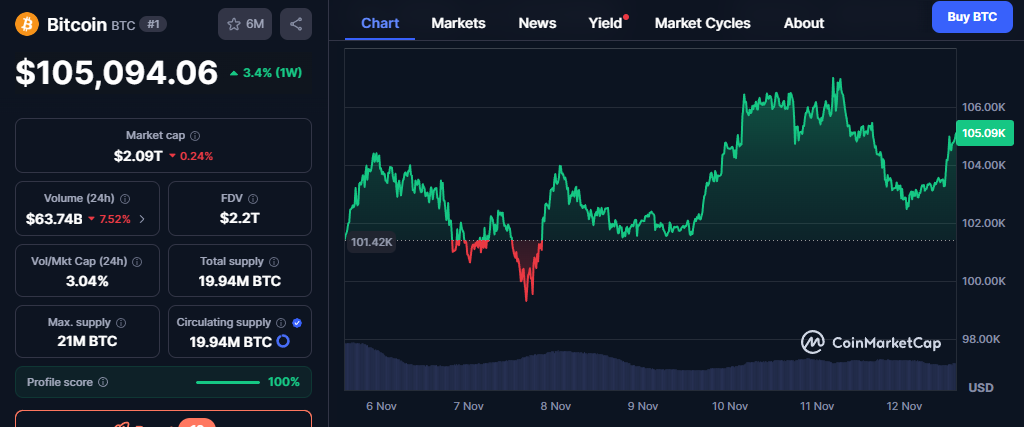
Consolidation and the Future of Mining
Large players are consolidating control through private infrastructure and direct access to power generation. Smaller miners, reliant on grid electricity, may soon find themselves priced out.
Also Read: Bitcoin Fills $104K CME Futures Gap as Whales Dump $240M — Is $100K the Next Support?
Thiel predicts the industry will eventually self-regulate as weaker operators exit. “By 2028, you’ll either be a power generator, owned by one, or partnered with one,” he warned. “The days of miners just plugging into the grid are numbered.”
The message is clear: Bitcoin mining’s future belongs to the most efficient. Those who innovate, diversify, and control their energy costs will endure. The rest may find the 2028 halving marks the end of their mining journey.
Disclaimer: The information in this article is for general purposes only and does not constitute financial advice. The author’s views are personal and may not reflect the views of Chain Affairs. Before making any investment decisions, you should always conduct your own research. Chain Affairs is not responsible for any financial losses.

I’m a crypto enthusiast with a background in finance. I’m fascinated by the potential of crypto to disrupt traditional financial systems. I’m always on the lookout for new and innovative projects in the space. I believe that crypto has the potential to create a more equitable and inclusive financial system.