|
Getting your Trinity Audio player ready...
|
- USDT usage reached a record 35.1%, highlighting growing demand for stable digital assets.
- Cross-border payments and corporate treasury operations are driving real-world stablecoin adoption.
- Businesses are becoming a key force behind blockchain growth while institutional investors remain cautious.
Recent market data shows Tether (USDT) strengthening its position as the industry’s preferred digital dollar. Rather than signaling fear, the trend reflects a broader shift toward practical blockchain use cases, particularly in global payments and corporate finance. As stablecoin adoption accelerates, businesses—not speculators—are increasingly driving the next phase of crypto growth.
USDT Usage Climbs to New Highs
Seasonal market data indicates that USDT usage reached 35.1% in July 2026, surpassing the 29.0% recorded during the same period in 2021. The figure also marks a sharp improvement compared with 2024, when stablecoin usage remained comparatively weak.
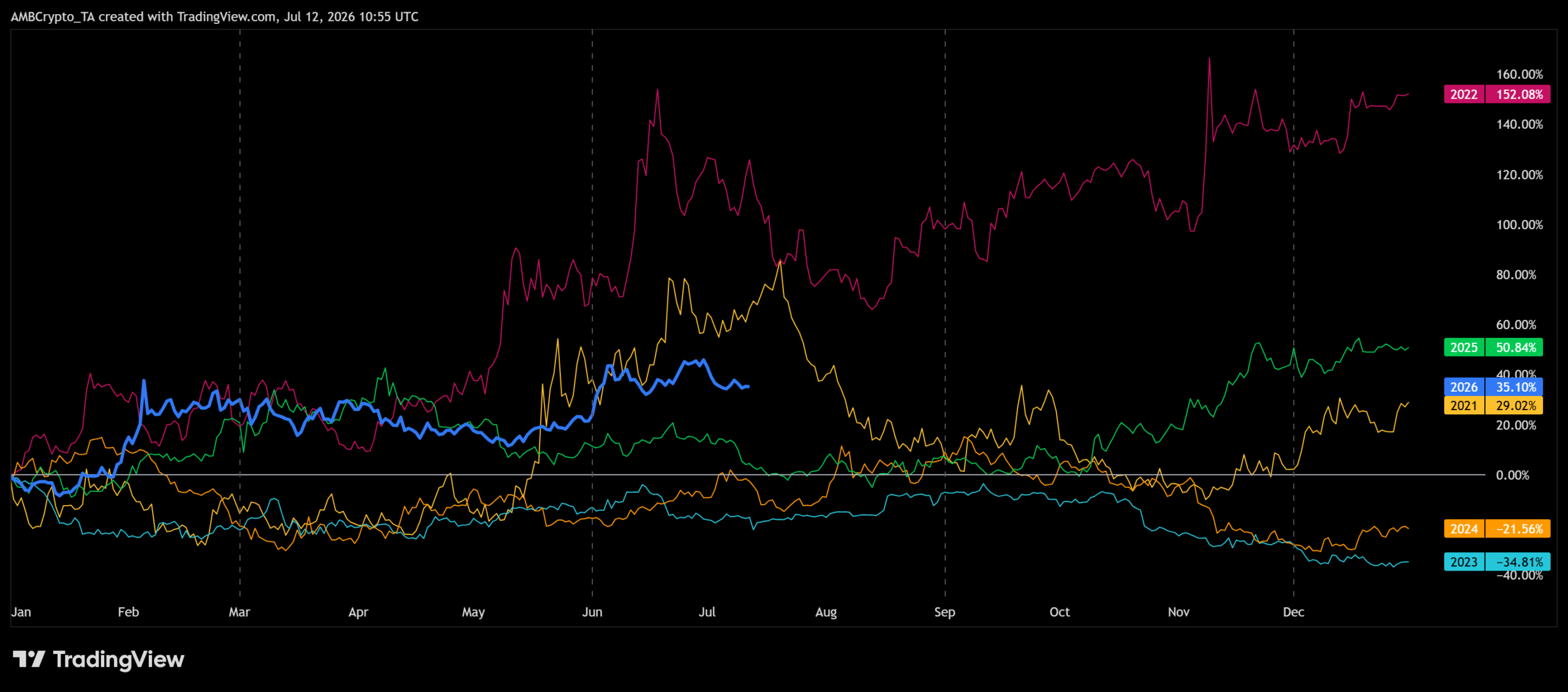
The growing share of USDT suggests investors are prioritizing liquidity and lower volatility while remaining active in digital asset markets. Rather than exiting crypto altogether, many are choosing stable assets that can be deployed quickly whenever new opportunities emerge.
This trend also highlights how stablecoins have evolved beyond simple trading tools into core infrastructure for blockchain-based finance.
Cross-Border Payments Fuel Stablecoin Growth
The expansion of stablecoin adoption is increasingly tied to real-world economic activity.
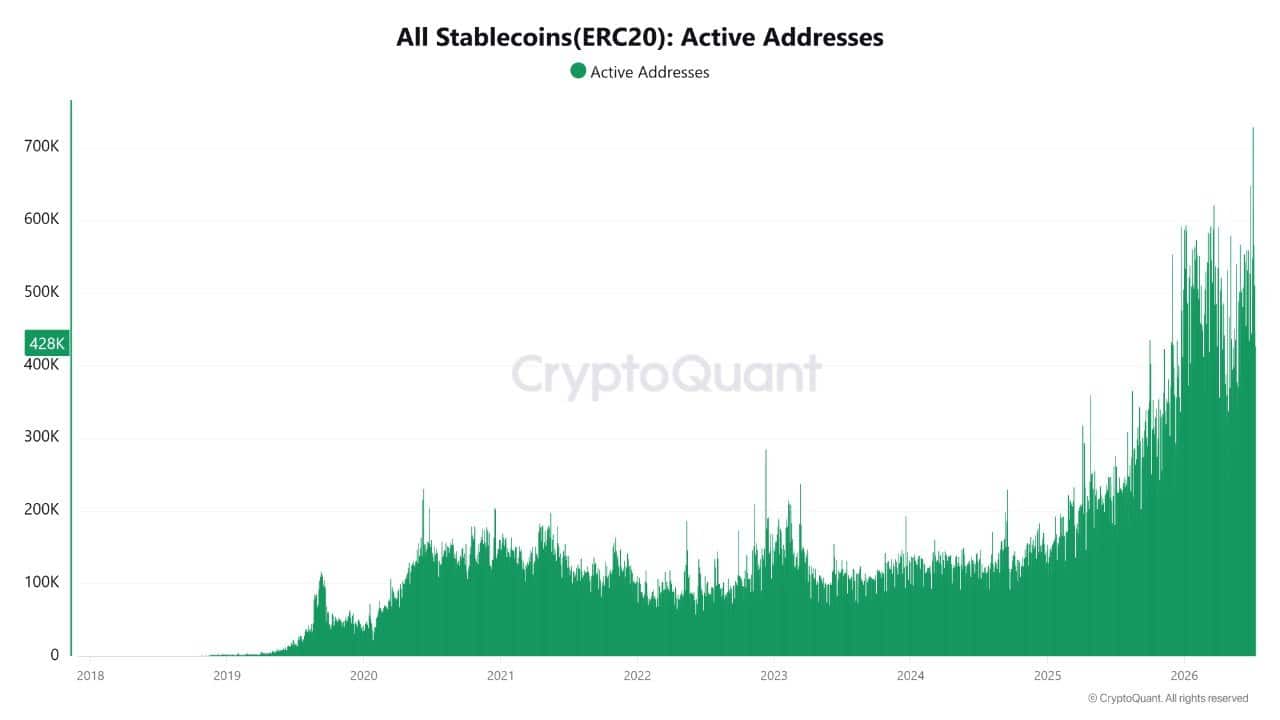
Activity across ERC-20 stablecoins has climbed significantly, with daily active addresses consistently ranging between 400,000 and 700,000 since 2025. Rising network participation reflects growing demand from both individuals and businesses using blockchain for everyday financial operations.
Major payment companies including Visa, Mastercard, PayPal, and Stripe have expanded stablecoin support for cross-border settlement. These integrations allow faster and potentially cheaper international transfers, making blockchain technology more attractive for commercial use.
At nearly $312 billion in market value, the stablecoin sector has grown into one of the largest segments of the digital asset industry, supported by demand extending well beyond traditional crypto investors.
Corporate Adoption Reshapes Blockchain’s Future
Businesses are increasingly adopting stablecoins for treasury management and international settlements, moving beyond the initial goal of reducing transaction costs.
Corporate interest now reflects confidence in blockchain’s ability to improve financial efficiency while maintaining predictable value. This practical approach is helping establish stronger long-term foundations for digital assets.
Meanwhile, institutional investors have not yet shifted significant capital into Bitcoin or Ethereum. Their continued preference for stablecoins suggests that operational efficiency currently outweighs the pursuit of speculative gains.
Stablecoins are becoming much more than a defensive investment choice. Their expanding role in global payments, corporate treasury operations, and blockchain infrastructure signals a maturing crypto industry focused on utility rather than speculation.
Also Read: Tether Brings USDT Back to Bitcoin: 5 Things Investors Need to Know
If businesses continue embracing stablecoin technology while payment networks expand support, practical financial applications could become the primary driver of blockchain adoption in the years ahead.
Disclaimer: The information in this article is for general purposes only and does not constitute financial advice. The author’s views are personal and may not reflect the views of Chain Affairs. Before making any investment decisions, you should always conduct your own research. Chain Affairs is not responsible for any financial losses.

I’m a crypto enthusiast with a background in finance. I’m fascinated by the potential of crypto to disrupt traditional financial systems. I’m always on the lookout for new and innovative projects in the space. I believe that crypto has the potential to create a more equitable and inclusive financial system.