
|
Getting your Trinity Audio player ready...
|
- AI developers frequently use other models for training, testing, and validation.
- Blockchain tools may help solve AI data provenance and ownership tracking issues.
- Decentralized governance models are struggling to keep up with AI’s rapid evolution.
Elon Musk’s recent court testimony has reignited discussion across the AI and blockchain industries after he disclosed that his company xAI used OpenAI systems during model development. His remarks also framed a controversial idea in a surprisingly matter-of-fact way: using one artificial intelligence system to evaluate or refine another is, in his view, standard practice in modern machine learning.
The statement has quickly become a talking point, not just for AI developers but also for blockchain and Web3 communities exploring how decentralized systems might intersect with rapidly evolving AI infrastructure.

Cross-Model AI Training Becomes Industry Standard
Musk’s comments highlight a growing reality in AI development—models are rarely built in isolation. Developers often rely on existing large language models to generate synthetic data, test outputs, or benchmark performance before refining their own systems.
This approach is largely driven by efficiency. Training advanced models from scratch is expensive and time-consuming, so teams frequently leverage external AI systems to accelerate early-stage development.
In decentralized AI ecosystems and Web3 protocols, this practice is even more common. Projects aiming to reduce compute costs or bootstrap functionality often integrate third-party models, blurring the lines between independent development and collaborative model usage.
Intellectual Property and Data Provenance Challenges
While cross-model usage may be practical, it raises unresolved questions about intellectual property and data lineage. If one AI system helps shape another, tracing ownership and training sources becomes increasingly complex.
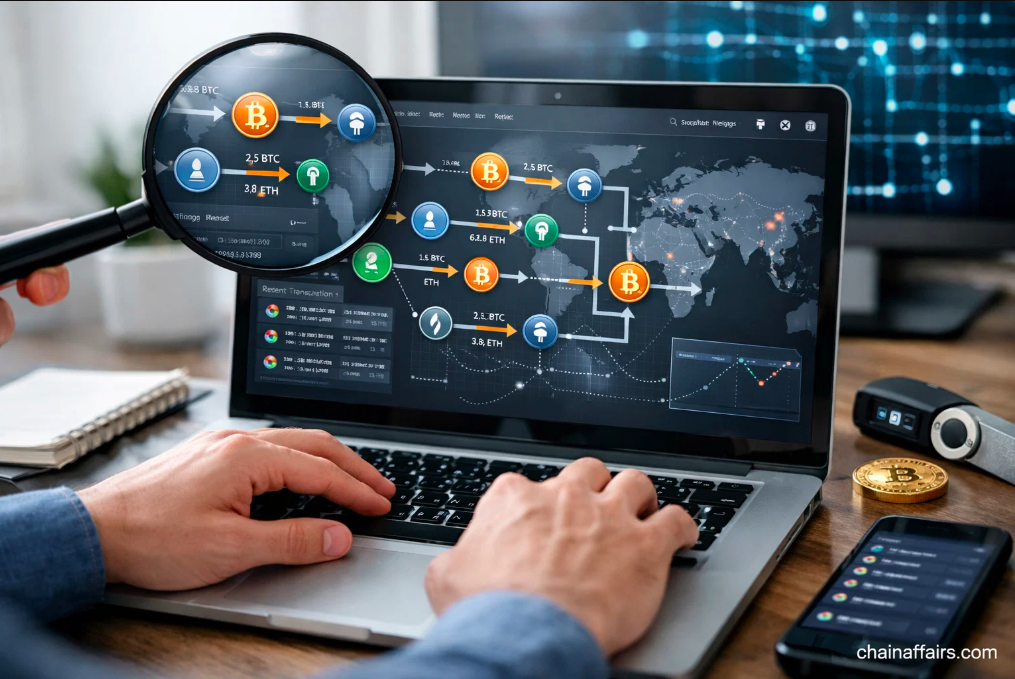
Blockchain advocates argue that distributed ledger technology could offer a solution. By recording dataset origins and model weight updates on-chain, developers could create verifiable audit trails for AI training processes. Some emerging projects are also exploring zero-knowledge proofs to confirm whether models were trained on proprietary or open-source data without exposing sensitive details.
However, global legal frameworks have not yet caught up. The lack of clear standards for AI-to-AI training creates uncertainty for decentralized autonomous organizations (DAOs) and tokenized AI platforms operating across jurisdictions.
What This Means for Decentralized AI Governance
Musk’s remarks arrive at a time when crypto communities are actively debating how AI systems should be governed in decentralized environments. For DAOs managing open-source models, the challenge lies in balancing innovation speed with transparency and accountability.
Also Read: Forbes 2026 Billionaires: Elon Musk Dominates While Crypto Titans Enter the Elite
Proposed solutions include smart contract-based licensing, on-chain royalty systems, and token incentives for data contributors. Yet enforcement remains difficult when foundational models depend on closed commercial ecosystems.
The discussion underscores a broader shift: as AI becomes more interconnected, governance frameworks will need to evolve just as quickly as the technology itself. For blockchain infrastructure providers and decentralized compute networks, transparency in AI training is no longer optional—it is becoming a core requirement.
Disclaimer: The information in this article is for general purposes only and does not constitute financial advice. The author’s views are personal and may not reflect the views of Chain Affairs. Before making any investment decisions, you should always conduct your own research. Chain Affairs is not responsible for any financial losses.

I’m your translator between the financial Old World and the new frontier of crypto. After a career demystifying economics and markets, I enjoy elucidating crypto – from investment risks to earth-shaking potential. Let’s explore!