
|
Getting your Trinity Audio player ready...
|
- JPMorgan identifies the CLARITY Act as the primary driver for a market rebound in the second half of 2026.
- The bill is currently stalled in the Senate due to a dispute over whether crypto platforms can offer interest on stablecoins.
- Passing the legislation would end “regulation by enforcement,” clearing the way for massive institutional capital entry.
Despite a recent downturn in digital asset prices, JPMorgan analysts believe the crypto market is primed for a significant rebound in the latter half of 2026. The catalyst for this recovery isn’t just market cycles or technical indicators—it’s the potential passage of the CLARITY Act, a landmark piece of legislation currently making its way through Washington.
Breaking the Cycle of “Regulation by Enforcement”
JPMorgan’s research suggests that the approval of a comprehensive market-structure bill by midyear could be the “green light” institutional investors have been waiting for. For years, the U.S. crypto sector has operated under a cloud of uncertainty, often facing what industry leaders call “regulation by enforcement.”
The CLARITY Act aims to dismantle this ambiguity by establishing a formal rulebook. According to the bank, this shift would not only reshape how markets operate but also accelerate the tokenization of traditional assets and provide a clear path for banks to engage with digital currencies without fear of sudden legal repercussions.
The Stalemate Over Stablecoin Rewards
While the bill successfully cleared the House of Representatives with bipartisan support, its progress in the Senate has hit a significant roadblock. The primary point of contention involves stablecoin yields.
Also Read: JPMorgan Files Bitcoin-Linked Notes: High-Risk, High-Reward Investment
Traditional banking institutions have voiced concerns that if crypto platforms are allowed to pay interest or rewards on stablecoin holdings, they could lose a massive share of their customer deposits. This “deposit drain” fear has led to intense lobbying, resulting in a legislative stalemate. Recent reports from White House meetings suggest that while negotiators are exploring usage-based incentives, they have largely moved away from allowing yields on idle stablecoin balances to appease the banking sector.
A High-Stakes Timeline for 2026
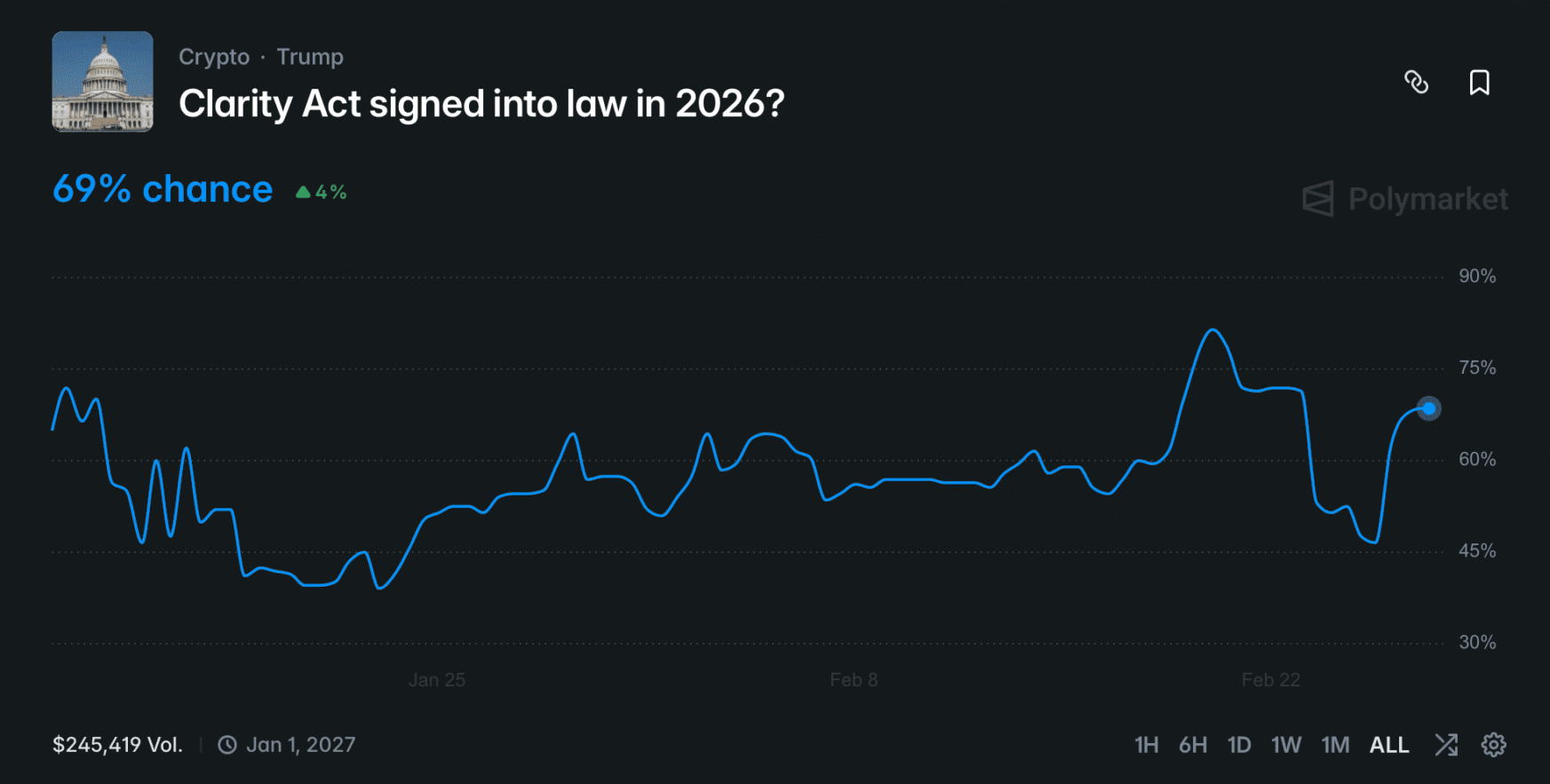
Industry heavyweights remain cautiously optimistic about a resolution. Coinbase CEO Brian Armstrong and Ripple’s Brad Garlinghouse have both hinted at an April timeline for potential approval. This sentiment is echoed by fluctuating odds on prediction markets like Polymarket, where confidence in the bill passing this year recently climbed back up after a sharp dip.
If a compromise is reached, the ripple effect could be substantial. By defining the jurisdictional boundaries between the SEC and the CFTC, the CLARITY Act would provide the structural integrity needed to drive the market back toward—and potentially beyond—its previous record highs.
Disclaimer: The information in this article is for general purposes only and does not constitute financial advice. The author’s views are personal and may not reflect the views of Chain Affairs. Before making any investment decisions, you should always conduct your own research. Chain Affairs is not responsible for any financial losses.

I’m your translator between the financial Old World and the new frontier of crypto. After a career demystifying economics and markets, I enjoy elucidating crypto – from investment risks to earth-shaking potential. Let’s explore!