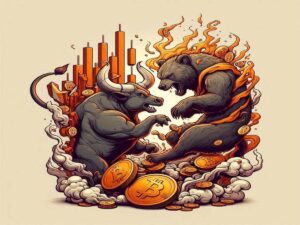

- Play-to-Earn focused on financial incentives but often led to unsustainable token economies.
- Play-and-Earn prioritizes gameplay, fun, and community while integrating blockchain rewards responsibly.
- Investors and developers are pivoting toward sustainable, player-centric models in Web3 gaming.
- The future of blockchain games lies in balancing entertainment value with real digital ownership.
As Web3 gaming continues to evolve, two major models have emerged at the heart of the blockchain gaming revolution: Play-to-Earn (P2E) and Play-and-Earn (PaE). While both allow players to earn real-world value through gaming, they differ significantly in philosophy, sustainability, and player engagement. The shift from “earning first” to “playing first” reflects a broader maturation of the GameFi ecosystem — one where entertainment and economics must strike a careful balance.
The Rise of Play-to-Earn: A Revolutionary Start
When Play-to-Earn (P2E) games first appeared during the 2021 crypto bull run, they promised a paradigm shift in gaming economics. Titles like Axie Infinity and The Sandbox allowed players to earn tokens and NFTs through in-game activities, creating new income opportunities, especially in emerging markets.
At its peak, Axie Infinity saw daily active users in the millions, and some players were earning more than local average wages by breeding, battling, and trading digital creatures. P2E games leveraged blockchain tokens as incentives, often tradable for fiat currencies, which attracted a flood of speculators and gamers alike.
However, as token prices fell and reward-based economies became unsustainable, the model’s flaws surfaced. Many players treated these games as short-term investments rather than entertainment experiences. The emphasis on profit led to inflationary tokenomics and declining user engagement once the financial returns faded.
The Evolution to Play-and-Earn: Putting Fun Before Finance
Enter the Play-and-Earn (PaE) model — a more balanced and gamer-centric approach. Unlike its predecessor, Play-and-Earn prioritizes enjoyable gameplay, community interaction, and long-term retention over quick financial gains. Earning remains a component, but it’s designed to enhance, not define, the experience.
Games such as Illuvium, Guild of Guardians, and Big Time are leading this shift by creating AAA-quality gameplay with integrated blockchain rewards. In these titles, tokens and NFTs serve as added value for committed players, not the main reason to log in.
This model reflects lessons learned from early P2E experiments. Developers now focus on sustainable token economies, where utility — such as governance, crafting, or cosmetic customization — supports in-game ecosystems rather than speculative trading. The goal is to attract traditional gamers into Web3 spaces without overwhelming them with crypto complexity.
Why Play-and-Earn Is Gaining Ground
The shift toward Play-and-Earn aligns with a broader trend of quality-first game development. For gamers, this model offers several key advantages:
- Sustainability and Stability:
PaE games are less vulnerable to token price swings. Since earning isn’t the primary motivator, user engagement remains steady even during market downturns. - Player Experience Comes First:
Developers emphasize gameplay, storytelling, and world-building — the same principles that drive successful traditional games. Blockchain features act as enhancements, not distractions. - Real Ownership Without Pressure:
NFTs and in-game assets still exist but function as collectibles or optional rewards. Players can trade or use them freely, fostering a healthier, player-driven economy. - Appeal to Mainstream Audiences:
By lowering the entry barrier — often through free-to-play models or simplified wallets — Play-and-Earn titles attract both crypto-native and traditional gamers.
The result is a more organic form of engagement where players enjoy the game for its own merits, with the potential for value creation as a bonus rather than an expectation.
The Investor’s View: Venture Capital Favors Sustainability
From a funding perspective, venture capital in gaming is also pivoting toward Play-and-Earn models. Investors burned by unsustainable P2E token crashes are now looking for long-term IP value, strong user retention, and cross-platform potential.
Recent funding rounds for studios like Immutable, Animoca Brands, and Mythical Games indicate this changing sentiment. These companies focus on Web3 infrastructure, interoperability, and sustainable economies, betting on games that can compete with mainstream titles in both gameplay and profitability.
Venture capital firms recognize that while Play-to-Earn brought blockchain gaming into the spotlight, only Play-and-Earn can keep it there — by merging crypto incentives with authentic gaming enjoyment.
Challenges Ahead for Both Models
Despite progress, both Play-to-Earn and Play-and-Earn still face challenges. Regulatory uncertainty around gaming tokens, the complexity of onboarding new users, and the need for cross-chain compatibility remain major hurdles.
Moreover, many gamers remain skeptical of blockchain integration, viewing it as a monetization gimmick rather than an innovation. Overcoming that stigma will require education, transparency, and quality games that prove the value of Web3 technology beyond speculation.
The success of future blockchain games will depend on balance — between fun and finance, accessibility and decentralization, and creativity and commerce.
Also Read: Best Play-to-Earn Games for 2025 and Beyond
The evolution from Play-to-Earn to Play-and-Earn represents a natural maturation of Web3 gaming. The former sparked the movement by proving that players could own and profit from their time spent in-game. The latter refines that vision, ensuring that ownership and earning don’t overshadow enjoyment.
For the next generation of gamers and developers, Play-and-Earn offers the best of both worlds: immersive gameplay and fair value creation. As blockchain technology continues to integrate seamlessly into mainstream titles, the line between traditional and Web3 gaming will blur — and the future of digital play will belong to those who put players first.
Disclaimer: The information in this article is for general purposes only and does not constitute financial advice. The author’s views are personal and may not reflect the views of Chain Affairs. Before making any investment decisions, you should always conduct your own research. Chain Affairs is not responsible for any financial losses.

I’m a crypto enthusiast with a background in finance. I’m fascinated by the potential of crypto to disrupt traditional financial systems. I’m always on the lookout for new and innovative projects in the space. I believe that crypto has the potential to create a more equitable and inclusive financial system.