|
Getting your Trinity Audio player ready...
|
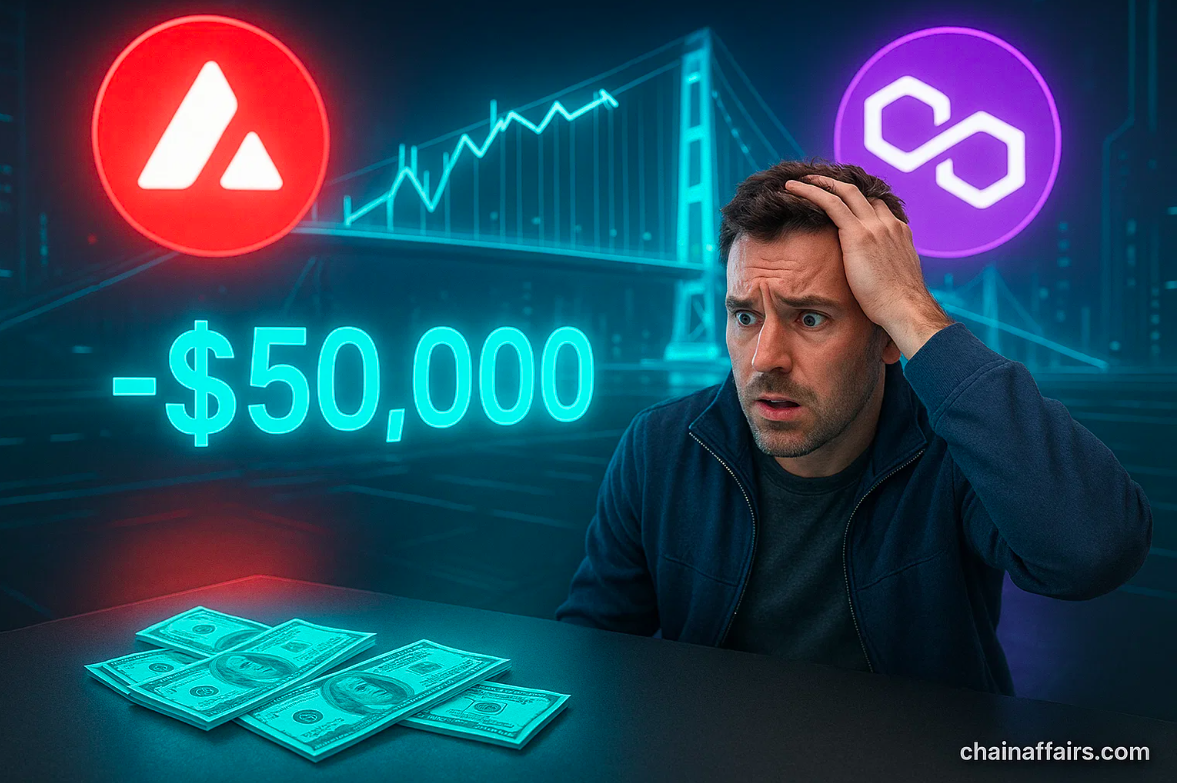
A $50,000 mistake taught me a hard lesson: bridge selection is one of the most critical decisions a DeFi trader can make. Three months ago, I chose the wrong bridge to move my portfolio and it cost me dearly. My expensive lesson taught me why bridge architecture matters more than most crypto users realize.
The $50K Mistake: When Convenience Becomes Costly
My routine portfolio rebalancing started with a simple plan: bridge assets from Ethereum to both Avalanche and Polygon. I intended to deploy them in high-yield farms to capture the multi-chain DeFi boom.
I chose Multichain (formerly AnySwap) for its convenience and universal support. With a clean interface and reasonable fees, the transaction seemed straightforward. I didn’t realize I was walking into a liquidity trap. Two weeks later, Multichain faced critical security and liquidity problems. My funds were not stolen, but they were stuck in a protocol that could no longer guarantee withdrawals. The bridge that promised seamless transfers became a digital prison for my assets.
Bridge Security: The Fundamental Difference
I learned the hard way that not all bridges are created equal. The differences between Avalanche and Polygon’s bridge ecosystems go far deeper than transaction fees.
Avalanche’s Bridge Philosophy: Native First
The Avalanche Bridge (AB) is a flagship native solution that takes a fundamentally different approach. It uses a validator network to secure assets and mint a wrapped representation of your tokens. This is backed by Intel SGX hardware security and a non-custodial approach.
This matters because it eliminates many of the risks that plague third-party bridges. When you use the native solution, your assets aren’t held by a single multi-signature wallet; they’re secured by cryptographic proofs and hardware-level security.
Key Avalanche Bridge advantages:
- Sub-2-minute finality for most transactions
- WETH.e and similar wrapped assets are secured by the bridge’s architecture.
- Intel SGX hardware security
- Transparent fee structure (typically 0.05% + gas)
Polygon’s Multi-Bridge Strategy: Choice with Complexity
Polygon offers multiple bridging options, but each comes with different security models, fees, and risks. The Polygon PoS Bridge is the primary solution, with the newer zkEVM Bridge and various third-party options also available.
The PoS Bridge uses a validator-based security model. A set of validators collectively manage bridged assets. While this has worked well, it introduces validator risk and requires users to trust the economic incentives keeping validators honest.
Polygon Bridge ecosystem:
- Multiple bridge options (PoS, zkEVM, third-party)
- PoS Bridge withdrawals are typically 45 minutes to 3 hours, not days.
- Various security models across different bridges
- Generally lower fees but higher complexity
The Real-World Performance Test
After my loss, I became obsessed with comparing bridge performance. Here’s what my research and on-chain data revealed:
Transaction Speed and Finality
Avalanche Bridge consistently delivered:
- Average bridging time: 8-15 minutes
- Predictable timing regardless of network congestion
Polygon PoS Bridge performance:
- Average bridging time: 45 minutes to 3 hours
- Highly variable timing during network stress
The difference becomes critical during market volatility. When DeFi opportunities move fast, spending hours waiting for a bridge transaction can mean missing substantial yields or facing increased slippage.
Cost Analysis: Beyond Surface Fees
Many users make an expensive mistake here: they focus on the bridge fee percentage and ignore the total economic cost.
Avalanche Bridge total costs (typical transaction):
- Bridge fee: 0.05% of transaction value
- Ethereum gas: $15-$50 depending on network congestion
- Avalanche gas: <$0.50
- Total for a $10,000 bridge: $20-$55
Polygon PoS Bridge total costs:
- Bridge fee: No explicit fee
- Ethereum gas: $15-$50
- Polygon gas: $0.01-$0.10
- Total for a $10,000 bridge: $15-$50 + opportunity cost
The opportunity cost matters more than most users realize. If you’re moving funds to capture a 100% APY farming opportunity, every hour of delay costs you meaningful returns.
What Really Protects Your Money
My $50,000 lesson taught me that bridge security isn’t about marketing claims—it’s about architecture.
Avalanche’s Hardware-Secured Approach
The Avalanche Bridge uses Intel SGX enclaves, which create hardware-level isolation for bridge operations. Even if the software running the bridge were compromised, attackers couldn’t access the cryptographic keys stored in SGX memory.
This approach has proven resilient. While numerous third-party bridges have suffered hacks totaling over $2 billion in 2022-2023, the Avalanche Bridge has maintained a clean security record.
Polygon’s Validator-Based Security
Polygon’s PoS Bridge relies on economic incentives to keep validators honest. Validators stake tokens, and misbehavior results in slashing. This model works well when properly implemented but introduces several risks:
- Validator centralization risk: If too few entities control validation, the bridge becomes vulnerable.
- Economic attack vectors: Sufficiently funded attackers could potentially compromise the system.
- Governance risks: Bridge parameters can be changed through governance proposals.
The Bottom Line: Choosing Your Bridge Strategy
Based on my $50,000 loss and months of research, here is my framework for choosing between Avalanche and Polygon bridges:
Choose Avalanche Bridge when:
- Security is your primary concern
- You need predictable transaction timing
- You’re moving significant amounts ($ > $10,000$)
- You value native-like asset representation over third-party alternatives
Choose Polygon bridges when:
- You’re making frequent, smaller transactions
- You can tolerate withdrawal periods of a few hours
- You’re already committed to the Polygon ecosystem
- Lower upfront fees outweigh other considerations
The crypto world is full of expensive lessons disguised as convenient shortcuts. My $50,000 mistake taught me that in DeFi, the cheapest option upfront can become the most expensive one.
Also Read: Polygon Supernets vs. Avalanche Subnets: What’s the Difference?
When it comes to bridging solutions, doing your homework isn’t just about optimizing fees—it’s about protecting your financial future. Choose your bridges as carefully as you’d choose your banks, because in many ways, that’s exactly what they are.
- BtcTurk hacked for $48M in multi-chain exploit. Deposits & withdrawals frozen as stolen funds move across 7 blockchains.
- $48M stolen from BtcTurk in major hack. Services suspended while hackers swap funds across multiple networks.
- BtcTurk suffers $48M breach, halting withdrawals as stolen crypto moves across 7 chains.
Disclaimer: The information in this article is for general purposes only and does not constitute financial advice. The author’s views are personal and may not reflect the views of Chain Affairs. Before making any investment decisions, you should always conduct your own research. Chain Affairs is not responsible for any financial losses

I’m a crypto enthusiast with a background in finance. I’m fascinated by the potential of crypto to disrupt traditional financial systems. I’m always on the lookout for new and innovative projects in the space. I believe that crypto has the potential to create a more equitable and inclusive financial system.