|
Getting your Trinity Audio player ready...
|
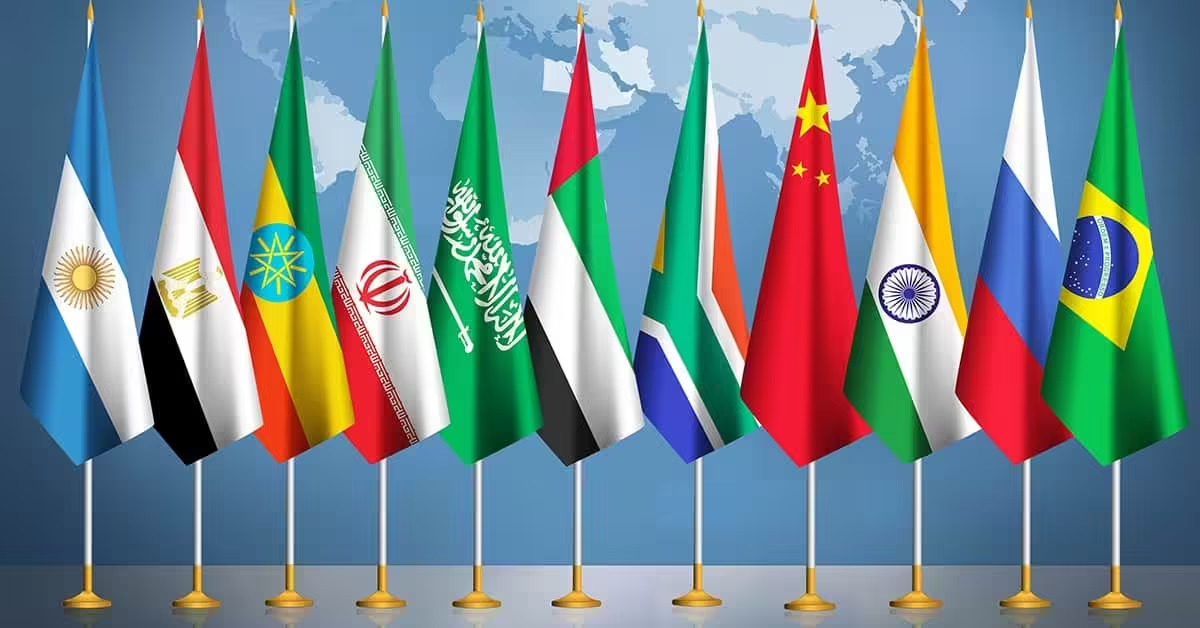
China is aggressively advocating for the Chinese yuan to replace the US dollar in trade between BRICS member countries and their global partners. Under the leadership of President Xi Jinping, China is urging developing nations to adopt local currencies for cross-border transactions, aiming to reduce their reliance on the US dollar. This push for de-dollarization is being seen as a way for these nations to secure their economic interests and level the playing field in global currency markets.
The move comes in response to concerns that US sanctions, particularly those imposed on Russia after its invasion of Ukraine in 2022, could harm the economies of developing nations. Countries fear the negative impact of such sanctions, prompting them to seek alternatives to the dollar to safeguard their financial stability.
Despite China’s growing influence, the Chinese yuan still faces significant challenges in overtaking the US dollar. As of 2022, the US dollar accounts for 58% of global reserves, with the euro holding a distant second place at 20%. In contrast, the yuan’s global share is only 2.5%, significantly lagging behind both the euro and the US dollar. Even if its share were to double or triple, it would still remain far from challenging the dominance of the greenback.
Cedric Chehab, an analyst from Fitch Solutions, points out that the yuan’s reserve share is still limited, and China’s current account restrictions make it unlikely that the yuan will surpass the US dollar in the foreseeable future. He even suggests that the yuan may struggle to surpass the Japanese yen, which holds a 5.5% share.
Also Read: India Opposes BRICS Common Currency, Prefers US Dollar for Trade Stability
In conclusion, while the BRICS nations’ push for local currency payments is a significant step in challenging the dollar’s supremacy, the US dollar remains firmly entrenched as the global reserve currency. The task of dethroning the dollar remains a formidable challenge for the Chinese yuan and other currencies in the near term.
Disclaimer: The information in this article is for general purposes only and does not constitute financial advice. The author’s views are personal and may not reflect the views of Chain Affairs. Before making any investment decisions, you should always conduct your own research. Chain Affairs is not responsible for any financial losses.

I’m a crypto enthusiast with a background in finance. I’m fascinated by the potential of crypto to disrupt traditional financial systems. I’m always on the lookout for new and innovative projects in the space. I believe that crypto has the potential to create a more equitable and inclusive financial system.